





Introduction
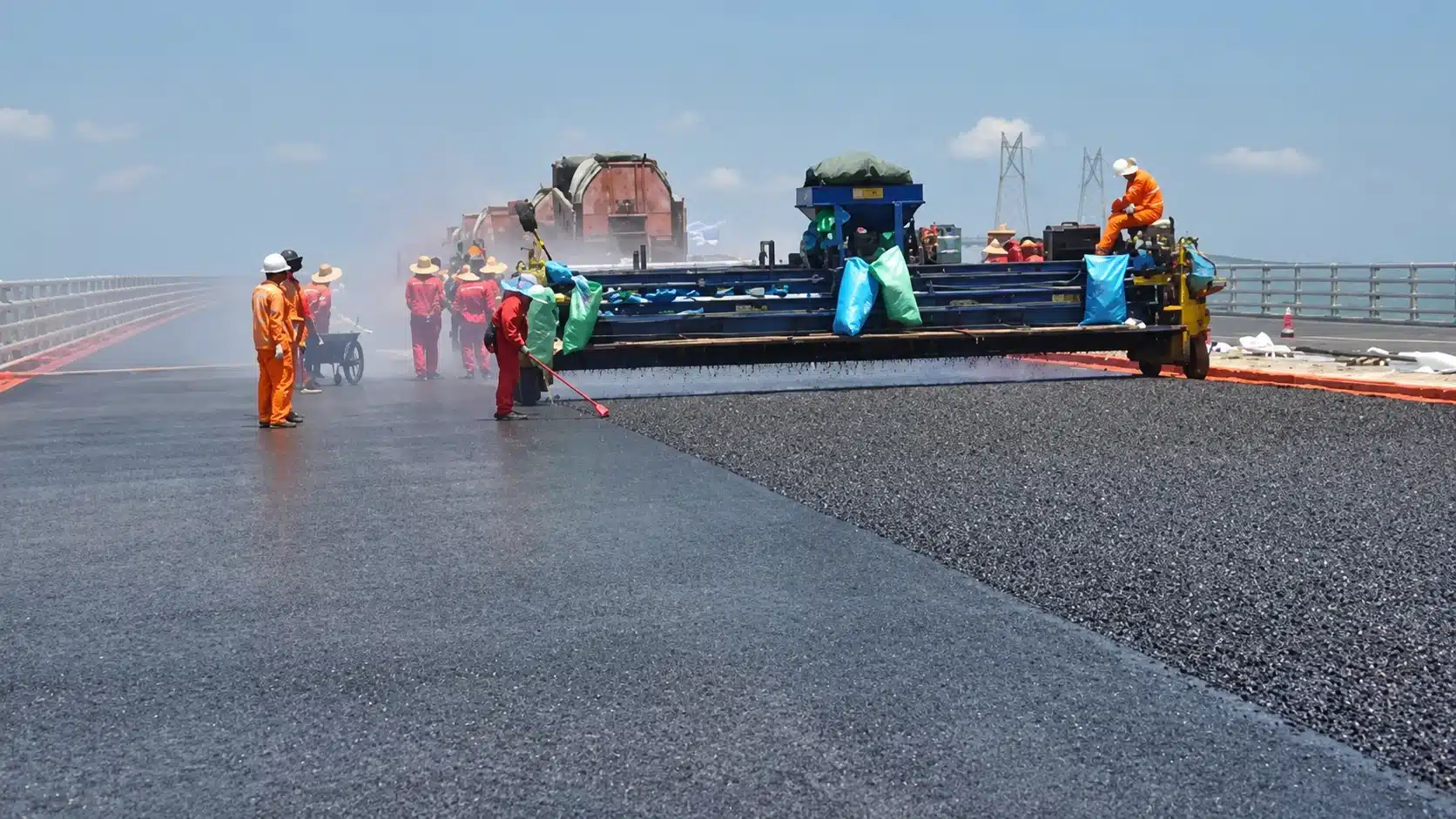
Ultra-high performance concrete (UHPC), with its high strength, high durability and excellent structural performance, is being increasingly widely used in bridges, bridge deck pavement, prefabricated components and high-performance infrastructure.
Compared with ordinary concrete, UHPC generally adopts a low water-to-binder ratio and contains a high proportion of ultrafine mineral materials such as cement and silica fume, together with reinforcing materials including steel fibers. This material system delivers outstanding mechanical properties and durability, yet it tends to cause construction problems such as reduced flowability, increased viscosity and difficult pumping.
For this reason, UHPC PCE superplasticizer plays a vital role in low water-to-binder ratio UHPC formulations. Through efficient water reduction and particle dispersion, PCE enables UHPC to maintain favorable flowability and constructability at a low water dosage.
Why does UHPC require a dedicated PCE superplasticizer?
The high strength of UHPC is closely related to its low water-to-binder ratio.
Reducing mixing water can cut down the internal pores of hardened concrete and improve the compactness and strength of the material. However, with less water, fine particles such as cement and silica fume are more prone to agglomeration, and the viscosity of the mixture tends to rise.
If water dosage is simply increased to improve flowability, the water-to-binder ratio will go up, which in turn impairs the strength and durability of UHPC.
Therefore, dedicated PCE for UHPC are required to improve particle dispersion and reduce the unit water consumption under a low water-to-binder ratio.
Polycarboxylate Ether (PCE) superplasticizer features high water-reducing efficiency and excellent dispersion capacity. It is one of the widely used high-performance superplasticizers for UHPC and high-performance concrete with low water-to-binder ratios.
For UHPC systems, PCE mainly performs the following functions:
- Reduce unit water usage
- Improve the dispersion of cement and ultrafine mineral materials
- Increase flowability of the mixture
- Improve UHPC pumping performance
- Help maintain a low water-binder ratio
Therefore, for UHPC PCE, attention should be paid not only to water reduction rate, but also to dispersion rate and material compatibility.
Case Study of UHPC PCE Bridge Deck Pavement for Xiaoqing River Super Bridge in Shandong
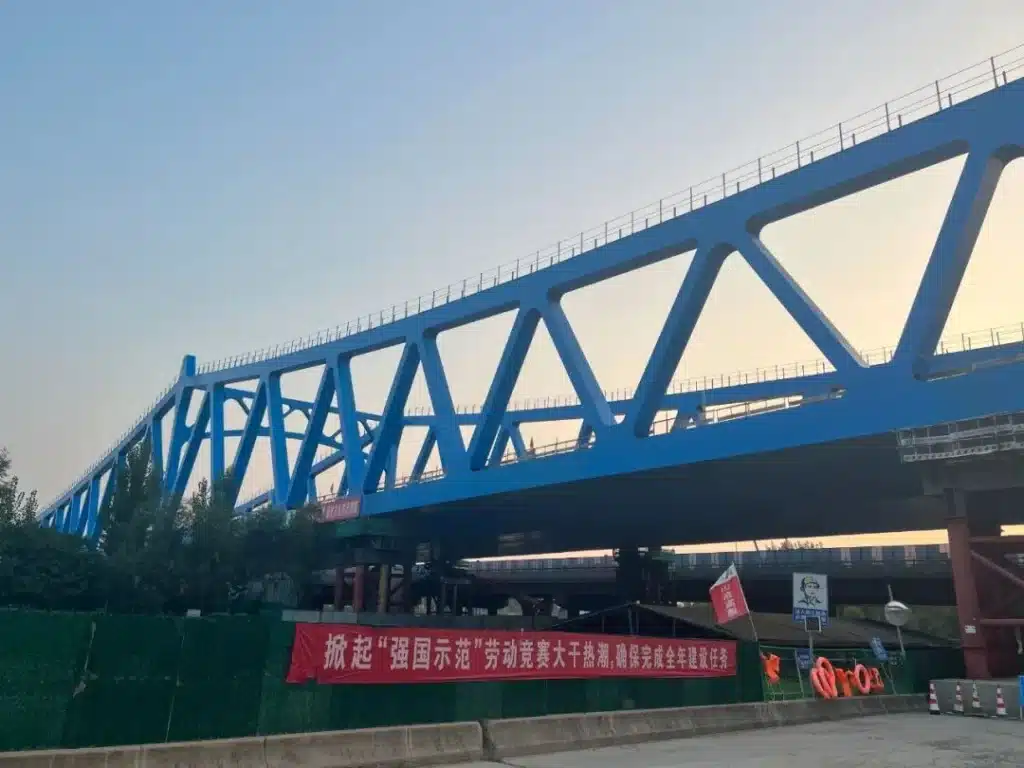
The UHPC bridge deck paving project for the Shandong Xiaoqing River Extra-Large Bridge is a representative application of UHPC in a large bridge project.
The project forms part of the expansion of the eastern section of the Jinan Ring Expressway between the Xiaoxujia Interchange and Yaoqiang Airport.
The main bridge is approximately 1,230.5 m long and 33 m wide, with four lanes in two directions and a design speed of 120 km/h.
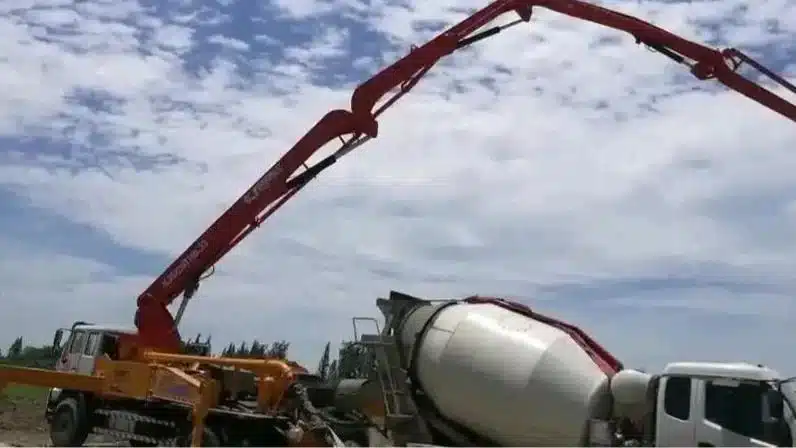
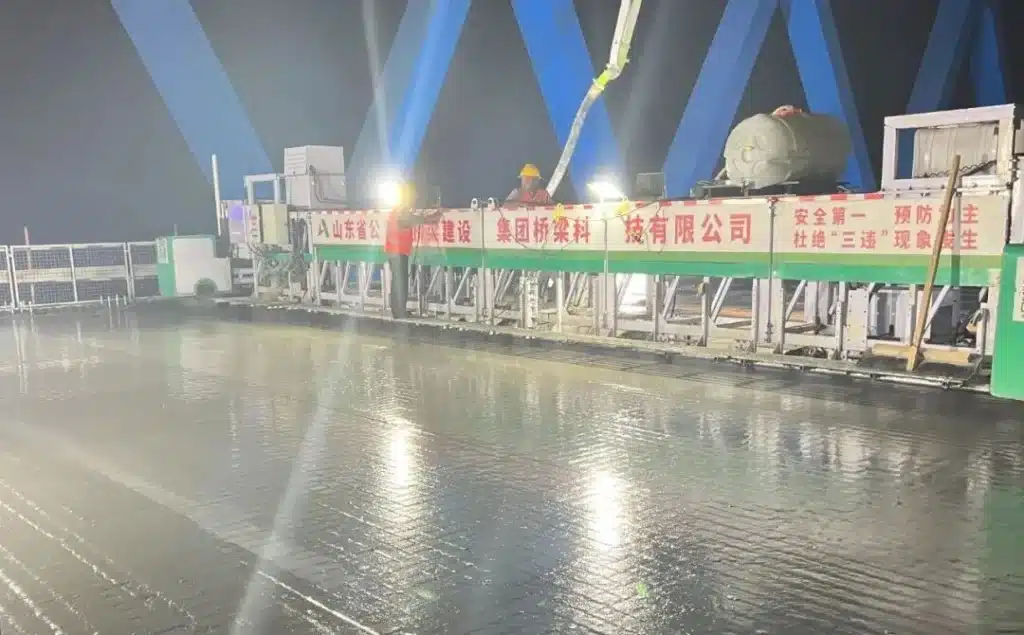
The bridge uses an orthotropic steel bridge deck with a 14 mm top plate. During bridge deck paving, UHPC had to be transported to an elevated construction area. Because secondary pumping was required, the UHPC mixture needed adequate flowability, stability, and pumpability.
How Does High-Dispersion PCE Improve UHPC Flowability and Pumping?
The project used a low water-binder ratio UHPC system containing ultrafine mineral admixtures and fibers.
These materials improve UHPC strength and durability, but they can also increase mixture viscosity.
To address this challenge, a dedicated PCE for UHPC with high dispersion capability was used.
The approach was not simply to add more water. Instead, the water-reduction and dispersion effects of the UHPC PCE helped improve the state of the cementitious particles, allowing the UHPC to maintain workable performance at a low water-binder ratio.
For UHPC pumping, effective dispersion can reduce particle agglomeration and promote a more uniform flow state, supporting elevated pumping and bridge deck construction.
PCE for UHPC Bridge Deck Paving Results
| Item | Result |
| Initial flow | 720 mm |
| T500 | 6 s |
| Compressive strength | 135 MPa |
| PCE superplasticizer consumption | 25 t |
| Secondary pumping | Yes |
| CO₂ emissions reduction | Approximately 20% |
The UHPC PCE used in the project achieved good flowability and mechanical performance.
The main project data were listed in the above sheet.
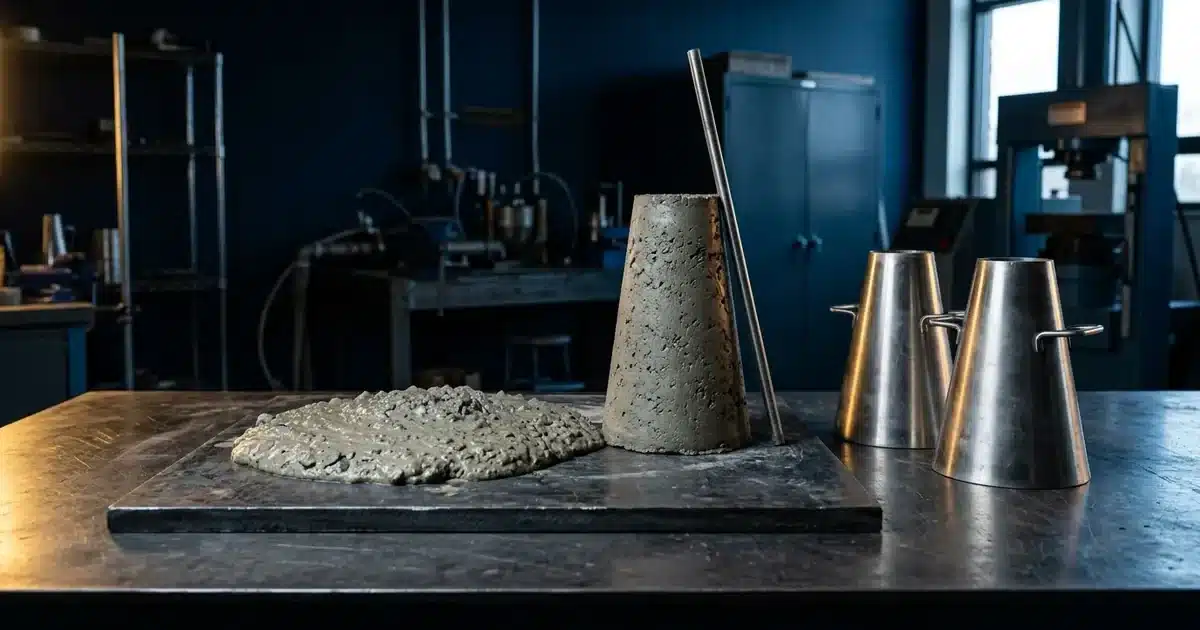
The 720 mm initial flow indicates good spreadability, while a T500 of 6 s reflects good flow characteristics.
The final compressive strength reached 135 MPa, demonstrating that the UHPC system could combine construction performance with high strength.
The project also reduced related material consumption through system optimization, achieving an approximately 20% reduction in CO₂ emissions.
It is important to note that UHPC performance is normally determined by the combined effects of cement, silica fume, mineral admixtures, fibers, PCE superplasticizer, water-binder ratio, and construction processes rather than by a single material.
Applications of UHPC PCE Superplasticizer
High-performance PCE superplasticizers are not limited to UHPC bridge deck paving.
As UHPC and high-performance concrete technologies develop, UHPC concrete admixtures and PCE superplasticizers can be used in a range of applications.
UHPC bridge structures: bridge deck paving, bridge strengthening, connection elements, and precast bridge components.
High-performance concrete: high-strength, high-flowability, and high-durability concrete systems.
Precast concrete: reducing water demand and improving flowability to support component density and production efficiency.
UHPC precast components: good flowability helps fill thin-wall, high-strength, and complex-section molds. Ultra-high-strength concrete: lower water-binder ratios create higher requirements for the water-reduction efficiency, dispersion, and compatibility of polycarboxylate ether superplasticizers.
Development Direction of PCE for UHPC
The Shandong Xiaoqing River Extra-Large Bridge project demonstrates the potential of UHPC in large bridge construction and highlights the importance of high-performance PCE in UHPC placement.
For low water-binder ratio UHPC, PCE is not only used to reduce water demand. Its more important role is to improve particle dispersion and help balance material performance with construction performance.
The process can be viewed as:
Low water-binder ratio → Higher density and strength
High-efficiency water reduction → Lower water demand
Particle dispersion → Improved mixture condition
Flowability retention → Pumping and construction requirements
Mix optimization → Balanced strength, durability, and workability
The future development of UHPC PCE superplasticizer will therefore focus not only on higher water reduction, but also on high dispersion, low water-binder ratio adaptability, material compatibility, and construction stability.
Conclusion
UHPC is being increasingly used in bridge structures, bridge deck paving, precast components, and high-performance infrastructure.
Its high performance, however, comes with a more complex material system. Low water-binder ratios, high levels of ultrafine materials, and fibers improve strength and durability while also creating higher requirements for flowability and pumping.
High-performance UHPC PCE superplasticizers can help UHPC maintain workable performance at low water-binder ratios through efficient water reduction and particle dispersion.
The Shandong Xiaoqing River Extra-Large Bridge project achieved an initial flow of 720 mm, a T500 of 6 s, and a compressive strength of 135 MPa, demonstrating the practical potential of high-performance UHPC systems in large bridge projects.
For PCE used in UHPC, future development will continue to move beyond water reduction alone toward high dispersion, low water-binder ratio adaptability, material compatibility, and construction stability.
With appropriate PCE selection, mix design, and construction control, UHPC can better deliver its high strength, durability, and workability in bridge and other high-performance concrete applications.