
Advanced concrete admixture technology and practical concrete solutions
25–40% Water Reduction*
0.1–0.5% Typical Dosage*
2–6h Slump retention
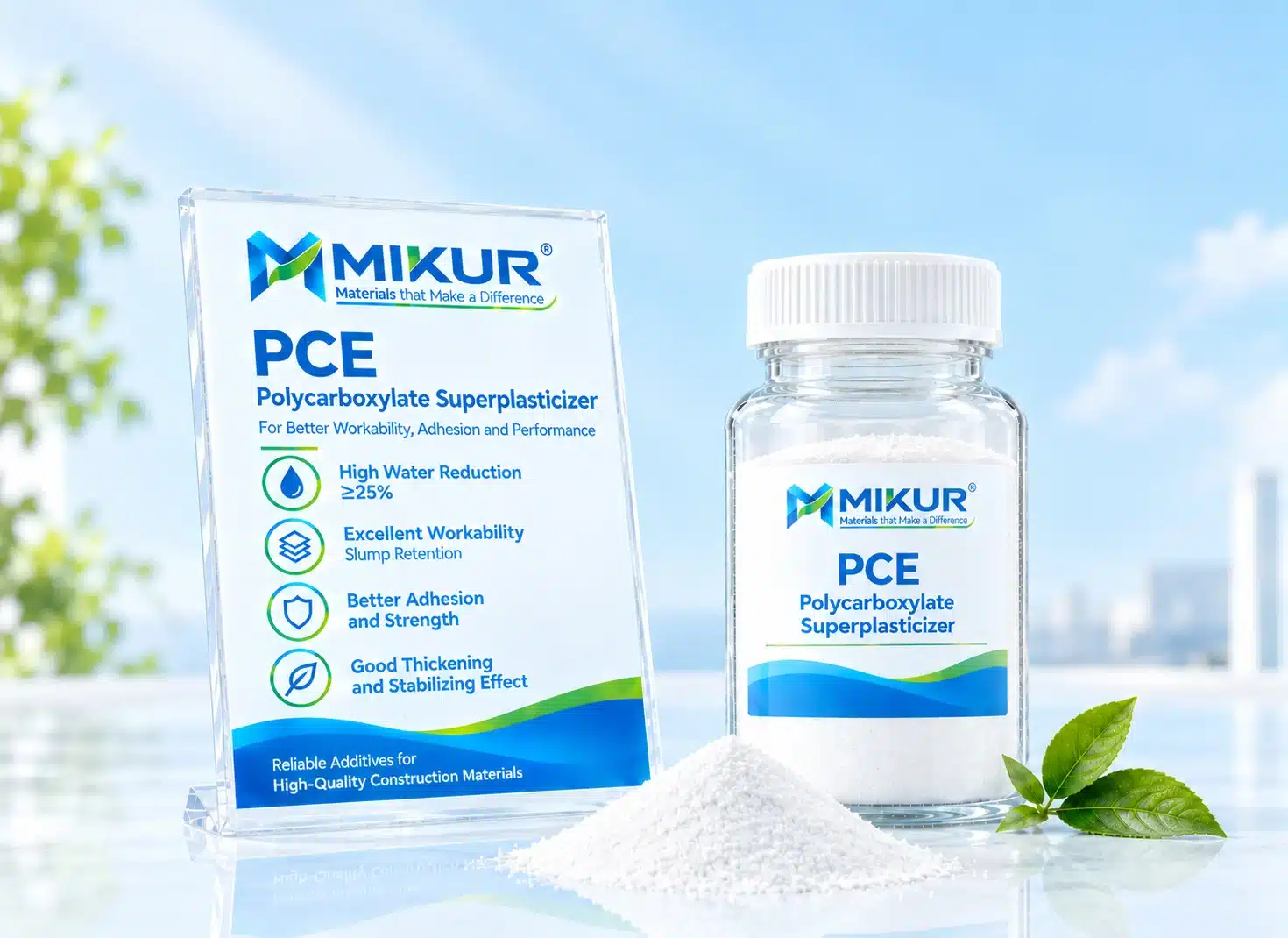
PCE, also known as polycarboxylate superplasticizer, is a third-generation high-performance water reducer. Its performance has changed the way concrete is mixed and made it a go-to admixture for demanding projects such as high-speed railways, bridges, high-rise buildings, tunnels and so on.
Compared with conventional superplasticizer, PCE offers low dosage, high water reduction, and good workability. It is now widely used in high-performance and high-strength concrete, as well as in many civil engineering and construction projects.
Mikur is a manufacturer specializing in PCE products for different applications. Our PCE is available in powder, tablet, and liquid forms, so you can choose the format that fits your project.
With ongoing technical development, highly automated production facilities, and efficient operations, Mikur provides customers worldwide with competitive PCE products and practical concrete solutions.


| Model | Bulk Density | Moisture Content | Water Reduction | PH | Dosage | Applications |
|---|---|---|---|---|---|---|
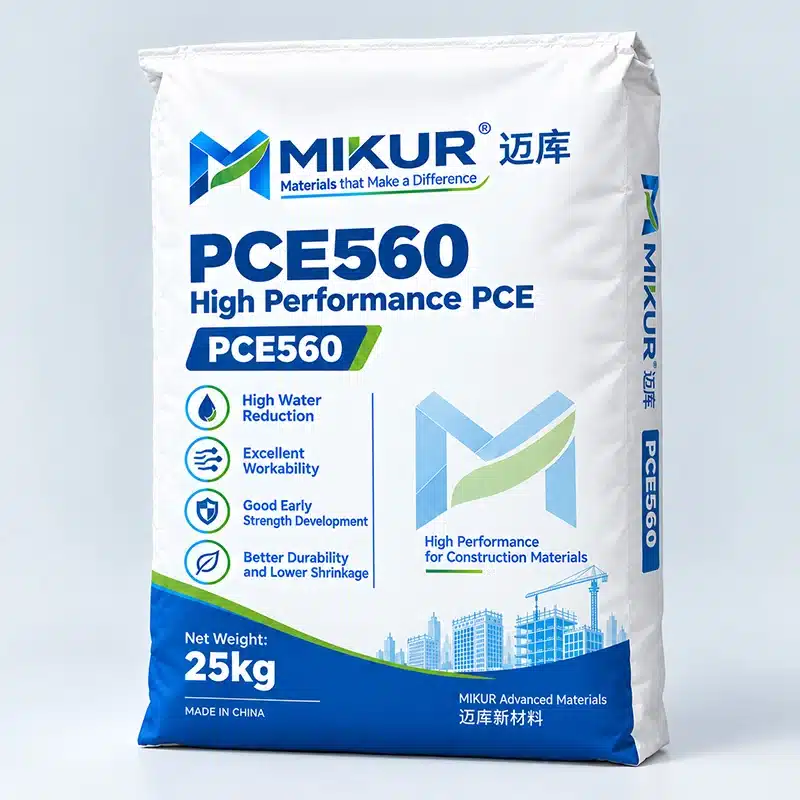
| PCE560 | 500-700 kg/m³ | ≤4% | ≥35% | 7-9 | 0.05-0.5% | For dry-mix mortars and high-performance concrete, including grouting, self-leveling, repair, waterproofing, UHPC and SCC. |
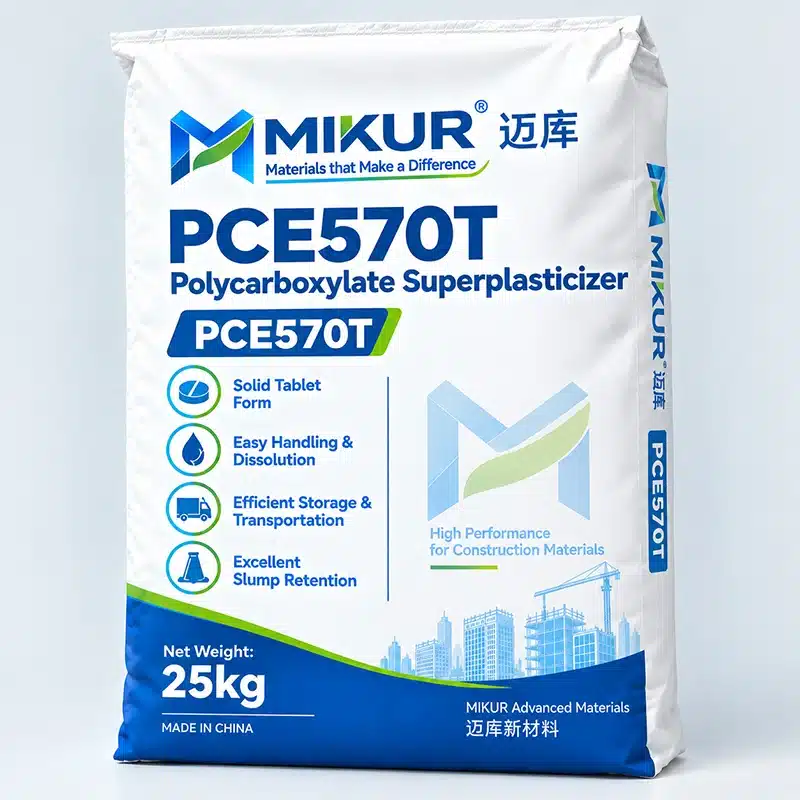
| PCE570T | 400-500 kg/m³ | ≤3% | ≥35% | 5-7 | 0.1-0.5% | Suitable for ready-mix, high-strength, high-durability and self-compacting concrete in construction and infrastructure projects. |
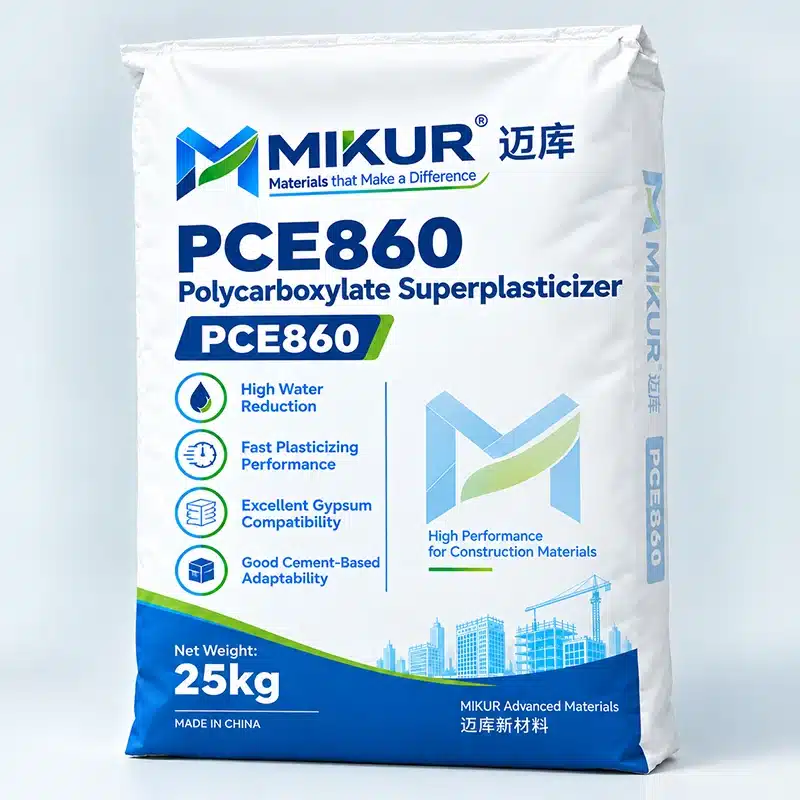
| PCE860 | 500-700 kg/m³ | ≤4% | ≥35% | 7-9 | 0.1-0.4% | Suitable for gypsum-based self-leveling, plaster, skim coat, precast components, grouting, bearing and repair mortars. |
| PCE1000 | 500-700 kg/ m³ | ≤4% | — | 7-8 | 0.01-0.1% | A versatile powdered slump-retention agent widely used in mortar and concrete systems, including grouting, self-leveling, repair mortar and UHPC. |
PCE superplasticizer can reduce water demand by 25%–40%, making it easier to achieve low water-to-binder ratios and produce high-performance concrete such as self-leveling and self-compacting concrete. It also helps address the rapid slump loss often seen with conventional products such as naphthalene-based water reducers, making it suitable for long-distance transport and demanding placement conditions, including large bridges and high-rise buildings.
The lower water-to-binder ratio made possible by high water reduction can improve concrete microstructure and enhance resistance to water penetration, freeze-thaw cycles, and carbonation, helping extend service life in demanding applications such as bridges and nuclear power projects.
Mikur polycarboxylate ether works well with different cements and mineral admixtures such as fly ash and silica fume. This adaptability is especially useful as concrete mix designs become more complex and material combinations vary from project to project.
Polycarboxylate superplasticizer production does not involve emissions of harmful substances such as formaldehyde, helping meet increasingly strict environmental requirements. Conventional water reducer production can generate pollutants.
Mikur PCE is typically used at a low dosage of 0.1%–0.5%. Although the unit price can be higher, the overall cost per cubic meter of concrete can be lower. It can also reduce cement consumption and, indirectly, carbon emissions, in line with the shift toward greener construction.
The molecular structure of PCE can be tailored to create products for different needs, including early-strength, set-retarding, and slump-retaining grades. This makes it easier to adapt the product to specific projects, such as winter construction and mass concrete, while conventional water reducers generally offer less room for adjustment.
Mikur serves customers in many countries and supports a wide range of construction projects. With production facilities, sales offices, and a global distributor network, we provide convenient support to customers around the world.
From raw-material selection to finished-product testing, our factories follow international standards such as ISO 9000.
Automated production lines and distributed control systems (DCS) help keep production efficient and consistent.
Our modern laboratories are equipped with advanced equipment and continuously develop efficient, more environmentally friendly products.
We provide mix-design optimization, technical support, and after-sales service whenever you need practical guidance.
PCE Polycarboxylate Superplasticizer offers high water reduction, excellent workability, slump retention, and strong compatibility with different cementitious materials. It is widely used in ready-mix concrete, precast concrete, high-performance concrete, dry-mix mortar, and specialty mortar, providing stable, efficient, and customizable solutions for diverse construction and production needs.

PCE is widely used in construction projects such as high-rise buildings, bridges, tunnels, and dams. Its high water reduction and good slump retention make it suitable for high-strength concrete.
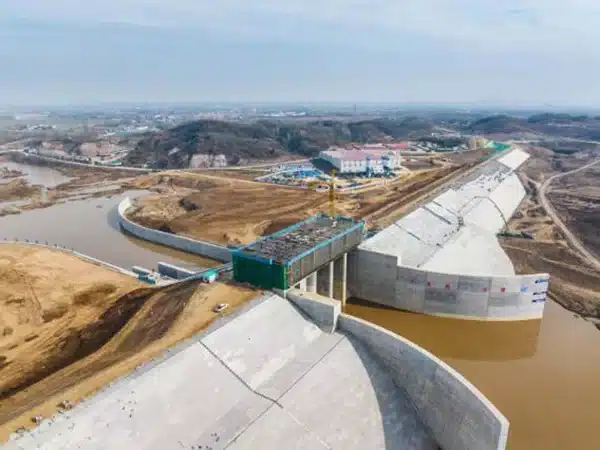
In water infrastructure projects, PCE is often used for mass concrete in reservoirs, sluice gates, dams, and similar structures. It can help reduce the heat of hydration and lower the risk of cracking during mass concrete placement.

Transportation applications include highways, railways, airport runways, and other infrastructure. Its strong slump retention and adaptability make it suitable for on-site concrete adjustment.
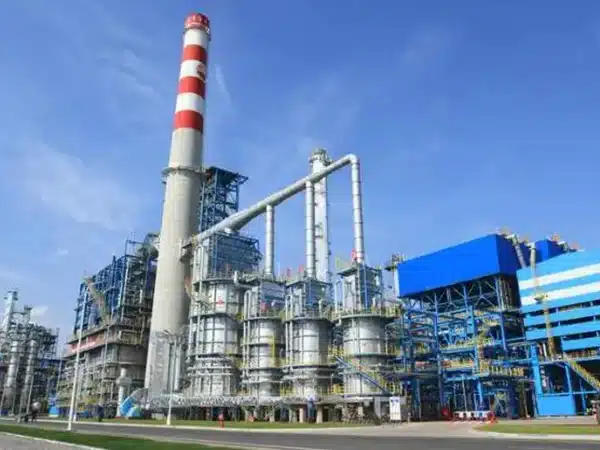
In industrial and residential construction, PCE is used to produce high-performance concrete and improve the seismic performance and durability of structures.

PCE is also widely used in precast production, including precast beams, slabs, and other components.

PCE can also be used in specialized applications such as underground works, marine projects, and nuclear power facilities.

For the underwater pile caps and high-performance precast pier concrete of a cross-sea bridge in Southeast Asia, the project faced a high-chloride marine environment. Our highly adaptable PCE improved durability in marine conditions, reduced heat of hydration, and helped control temperature cracking in mass concrete. Water reduction reached 32%, while slump loss after two hours was ≤20 mm.
For a super-high-rise mixed-use development in Central Europe, the project required excellent concrete flow, pumpability, slump stability, early strength, and surface appearance. After using a slump-retaining PCE, the concrete flowed and pumped more smoothly, construction efficiency improved, and the project saved more than RMB 1 million in total costs.
The main differences are the greater diversity and adjustability of the molecular structure, and the ability to build on the advantages of high-range water reducers while using a cleaner production process.
The PCE saturation point can vary significantly between cement types, so it is important to determine the right saturation point for each cement.
When sand contains a high level of clay, PCE performance can drop noticeably. Adjusting the sand ratio, increasing air content, or adding a thickener usually does not solve the issue well. The most effective approach is to reduce the clay content.
During production, the air content of PCE can sometimes reach around 8%. Using it directly at that level can negatively affect strength, so the usual approach is to defoam first and then introduce the required amount of air.
Defoaming agents are often available from suppliers, while the end user may need to select the appropriate air-entraining agent for the application.
PCE generally offers low dosage, high water reduction, and good slump retention, but the following points should also be considered in application:
① Dosage is more sensitive at low water-to-binder ratios, where higher water reduction can be achieved. When the water-to-binder ratio is above 0.4, the water-reduction effect and changes in performance become less pronounced.
② Dosage has a stronger impact when the binder content is high. Under otherwise similar conditions, the water-reduction effect at a total binder content below 300 kg/m³ is lower than at above 400 kg/m³. At a higher water-to-binder ratio and lower binder content, the effects can also interact.
Some surfactant components that lower surface tension can remain in PCE after production, giving it a certain air-entraining effect. A common practice is to defoam the product before use and then introduce the required amount of air as needed.
No.
PCE has a saturation point. Increasing the dosage can improve flow up to that point. Once the saturation point is exceeded, adding more may not improve flow and can instead lead to segregation, bleeding, and other issues.
Choose a slump-retaining grade: For long-distance transport or hot-weather conditions, select a slump-retaining PCE with a controlled-release effect.
Adjust the addition sequence: The delayed-addition method is recommended. Mix the aggregates, cement, and water for a certain period first, then add the water reducer. This can improve water-reduction performance and reduce slump loss.
Control mixing time: Extending the mixing time appropriately (60 seconds or more is recommended) helps ensure even dispersion.
Cleaning
If excessive PCE is added during concrete mixing, stop mixing immediately and thoroughly rinse the mixer truck and mixing equipment with clean water to reduce the effective dosage.
Add Other Admixtures
If excess PCE has already been added to the concrete, other admixtures, such as chloride stabilizers or setting agents, may be added as appropriate to adjust concrete performance and reduce the effect of the excess PCE.
Redesign the Mix
If the concrete has already been mixed and the excess PCE has seriously affected its performance, the mix design may need to be revised and additional measures taken to bring the concrete properties back into the required range.
Water Reduction: This indicates water-reduction capacity. High-performance PCE typically provides 25%–35% water reduction, directly affecting concrete strength and the water-to-binder ratio. Standard test results are more useful for comparison than maximum or limit values.
Slump Loss Over Time: For ready-mix concrete transported over long distances, excessive slump loss within 1–2 hours can make the concrete too stiff to pump. This is especially important in hot-weather construction.
Compressive Strength Ratio: This reflects the admixture’s contribution to later-age concrete strength and is an important reference when checking whether a product meets project acceptance requirements.