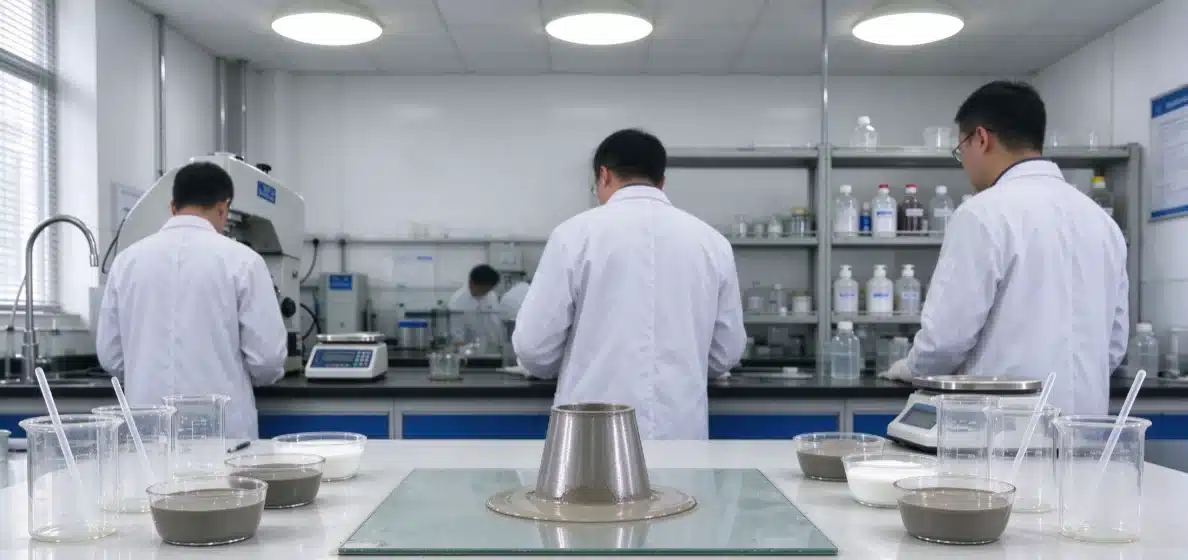







As the core admixture of modern high-performance concrete, polycarboxylate superplasticizer (PCE) relies on professional compounding technology to achieve outstanding performance and adapt to complex engineering requirements. A single PCE base solution often fails to meet all project demands; scientific compounding can leverage strengths while offsetting weaknesses, achieving both performance optimization and cost control. The following is a detailed explanation of PCE compounding technology for your reference:
1. Purpose and Significance of PCE Compounding
- 1. Performance optimization and customization:
- Improve slump retention: Solve the rapid slump loss that a single PCE may suffer from.
- Adjust setting time: Meet the requirements of different construction seasons (retarding in summer, early strength in winter) and process needs (e.g., precast elements requiring rapid hardening).
- Enhance water reduction rate: Through synergistic effects, further improve dispersion and reduce water demand.
- Improve workability: Reduce bleeding and segregation; improve cohesion, encapability of the paste, and pumpability.
- Air entrainment / air suppression: Introduce an appropriate amount of fine bubbles to improve frost resistance, or suppress harmful bubbles, as needed.
- Reduce sensitivity: Lower the PCE’s sensitivity to variations in cement/supplementary cementitious materials and to ambient temperature and humidity, improving adaptability.
- Solve special problems: Such as suppressing clay interference, reducing viscosity (self-compacting concrete), and improving early strength.
- 2. Cost control:
- Use relatively low-cost functional minor ingredients to optimize formulation cost while ensuring performance.
- Compounding can enhance base-solution performance and may reduce the required dosage of the base solution.
- 3. Overcoming the limitations of the base solution:
- PCE base solutions with different molecular structures each have strengths and weaknesses (e.g., high water reduction but poor slump retention, or good slump retention but moderate water reduction); compounding achieves complementarity.
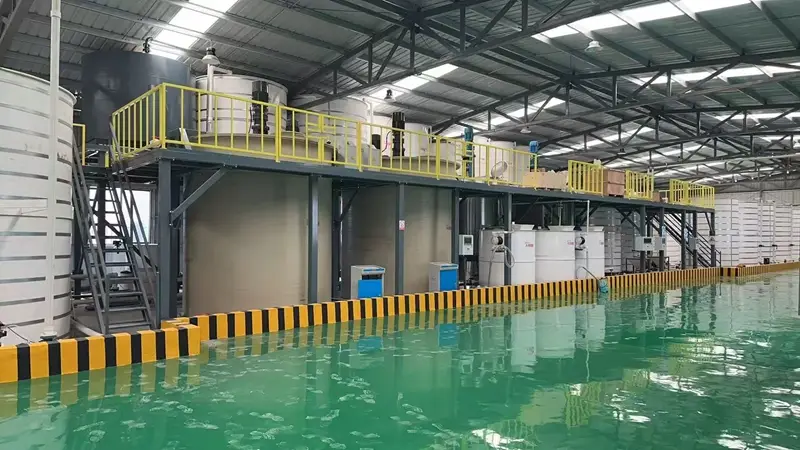
2. Main Components of the PCE Compounding System
- PCE base solution (mother liquor): The core and foundation of the compounding system. Selecting the molecular structure (backbone length, side-chain density and length, functional group types, etc.), solids content, and performance characteristics (high water-reducing type, slump-retaining type, early-strength type, etc.) is the starting point of compounding.
- Functional minor ingredients (modifying components): This is where the essence of compounding technology lies — a wide variety of ingredients with different functions:
- Retarders: Extend setting time and reduce slump loss.
- Common types: Sodium gluconate, sucrose, sodium citrate, sodium tripolyphosphate, sodium pyrophosphate, hydroxycarboxylic acids (e.g., citric acid, tartaric acid), molasses, certain phosphates, zinc salts, etc.
- Selection points: Retarding effect, impact on strength, compatibility with PCE, temperature sensitivity, and cost. Sodium gluconate and sucrose are the most commonly used and offer stable performance.
- Slump-retaining agents: Specifically designed to suppress slump loss; their mechanism of action may differ from or complement that of PCE.
- Common types:
- Small-molecule slump retainers: e.g., modified phosphate esters and certain amide compounds. Fast-acting, but durability of effect may be somewhat lower.
- Reactive slump retainers: Slowly release active components in the alkaline cement environment (e.g., certain esters), providing sustained slump retention.
- Polymeric slump retainers: Polymers with specific structures that act continuously through steric hindrance or electrostatic repulsion.
- Selection points: Slump-retention effect, synergy with PCE, impact on setting time, air entrainment, and cost.
- Common types:
- Accelerators (early-strength agents): Accelerate cement hydration and improve early strength.
- Common types: Calcium formate, calcium nitrate, calcium nitrite, triethanolamine, thiocyanates, certain sulfates, etc. Calcium formate is the most commonly used, with stable performance and relatively small side effects.
- Selection points: Early-strength effect, impact on later-age strength, impact on setting time, chloride content (watch for rebar corrosion), and compatibility with PCE.
- Air-entraining agents: Introduce large amounts of uniform, stable, closed fine bubbles.
- Common types: Rosin soaps, rosin thermal polymers, alkylbenzene sulfonates (e.g., sodium dodecylbenzene sulfonate – SDBS), soapbean powder types, and synthetic polymeric air-entraining agents (e.g., Vinsol resin substitutes).
- Selection points: Bubble quality (size, distribution, stability), controllability of air entrainment, impact on strength, and compatibility with PCE (avoid excessive defoaming or large bubbles). Synthetic air-entraining agents with good PCE compatibility and high bubble quality are usually preferred.
- Defoaming / antifoaming agents: Eliminate harmful large bubbles or suppress excessive air entrainment.
- Common types: Silicone-based, polyether-based, mineral oil-based, fatty alcohol-based, etc.
- Selection points: Defoaming/antifoaming efficiency, persistence, impact on concrete surface appearance (avoid oil spots), and compatibility with PCE.
- Viscosity-modifying agents / thickeners: Increase paste viscosity, improve resistance to segregation and bleeding, and enhance cohesion.
- Common types: Cellulose ethers (HPMC, HEC), welan gum, xanthan gum, polyvinyl alcohol (PVA), polyacrylamide (PAM), bentonite, etc.
- Selection points: Thickening effect, water retention, impact on strength, solubility, compatibility with PCE, and cost. HPMC is widely used in concrete.
- Anti-clay agents / clay inhibitors: Especially for aggregates with high mud (clay) content; reduce clay adsorption of PCE to preserve water-reducing performance.
- Common types: Cationic polymers, zwitterionic polymers, and certain specially structured surfactants or polymers. This is a recent research hotspot with rapidly evolving varieties.
- Selection points: Anti-clay effectiveness, impact on PCE performance, and cost.
- Shrinkage-reducing agents: Reduce plastic shrinkage and drying shrinkage of concrete.
- Common types: Polyether/polyol types, small-molecule alkanolamines (moderately effective), etc.
- Antifreeze agents: Lower the freezing point of water and improve early frost resistance (usually compounded with accelerators).
- Common types: Nitrites, nitrates, urea, certain alcohols, etc. (note environmental and durability requirements).
- Retarders: Extend setting time and reduce slump loss.
- Water: Adjusts the solids content and viscosity of the final product.
3. Key Technical Points of PCE Compounding
- Define objectives and requirements: This is the precondition of compounding. Is it for ordinary C30 pumped concrete or C60 high-strength concrete? For precast elements (requiring early strength and rapid hardening) or mass concrete (requiring retardation)? Summer hot-weather construction or winter low-temperature construction? Is the aggregate high in clay content? Are there special requirements for air content? Only with clear objectives can the right compounding route be chosen.
- Deeply understand raw material characteristics:
- PCE base solution: Master its molecular structure characteristics, optimal dosage range, water reduction rate, slump retention, air entrainment, adaptability to cements/supplementary cementitious materials, and sensitivity points (e.g., to sulfates, clay).
- Minor ingredients: Understand each ingredient’s properties, active components, optimal dosage range (usually very low, mostly 0.01%-0.3%), mechanism of action, possible side effects (e.g., excessive retarder causing severe retardation or later-age strength regression; excessive air-entraining agent greatly reducing strength; accelerators possibly shortening setting time or introducing harmful ions), and compatibility with other components (physical compatibility — dissolution, no layering or precipitation; chemical compatibility — no reaction-induced failure).
- Compatibility testing:
- Physical compatibility: Mix the proposed components at the designed ratios and observe whether the solution remains clear and transparent, and whether layering, precipitation, flocculation, or sharp viscosity increases occur. It must remain stable at storage temperatures (room and low temperature) over the storage period.
- Chemical compatibility: More complex; evaluate via cement paste fluidity and concrete tests. For example, certain retarders may compete for adsorption with specific PCE structures and reduce dispersion; certain defoamers may undermine the PCE’s dispersing action; certain air-entraining agents combined with PCE may degrade the bubble structure.
- Synergy verification:
- Compounding is not simple addition — the core is finding synergistic effects. For example:
- The synergy of a slump-retaining agent with an appropriate amount of retarder is often more effective and economical than using either alone.
- Compounding a specifically structured anti-clay agent with PCE can significantly reduce clay adsorption and restore PCE performance.
- Compounding a suitable air-entraining agent with PCE introduces beneficial bubbles without significantly reducing strength.
- Compounding effects must be verified through systematic cement paste fluidity tests, mortar tests, and concrete tests. Observe key indicators such as initial fluidity/slump, slump loss over time (30 min, 60 min, 90 min, etc.), setting time, air content and bubble structure, strength development (1 d, 3 d, 7 d, 28 d), and workability (bleeding, segregation, cohesion).
- Compounding is not simple addition — the core is finding synergistic effects. For example:
- Dosage optimization:
- Every minor ingredient has an optimal dosage range: too little has no effect, too much causes side effects (e.g., excessive retarder leading to days-long non-setting; excessive air-entraining agent sharply reducing strength).
- Dosage optimization is delicate work requiring gradient tests (e.g., retarder at 0.01%, 0.02%, 0.03%, …) to find the optimum where the effect is significant and side effects are controllable.
- Pay attention to interactions between ingredients. For example, increasing retarder dosage may require fine-tuning the air-entraining agent or defoamer dosage to maintain proper air content.
- Formulation stability and reproducibility:
- Ensure consistent quality of raw materials across batches (especially the base solution and minor ingredients).
- Optimize the production process (charging order, mixing speed and time, temperature control) to ensure uniform mixing and sufficient reaction (if required).
- Establish a strict quality control (QC) system and test each batch of compounded product against key performance indicators (e.g., solids content, density, pH, cement paste fluidity and its loss over time).
- Adaptability adjustment:
- There is no “universal formulation.” Before applying a compounded product to a specific project, suitability tests must be run with the cement, supplementary cementitious materials (fly ash, slag powder), and aggregates actually used on site. Cements from different plants and fly ash from different batches can vary widely in performance.
- Fine-tune the formulation (mainly the dosage ratios of the PCE base solution and minor ingredients) based on test results to meet the project’s specific requirements.
4. PCE Compounding Process Workflow
- Basic formulation design: Based on the target requirements, select the base solution type and preliminarily screen the functional minor ingredients that may be needed.
- Compatibility screening: Mix small samples in the laboratory and observe physical compatibility.
- Paste/mortar preliminary tests: Test the effects of different ingredient combinations and dosages on cement paste fluidity and its retention; screen effective combinations and approximate dosage ranges.
- Concrete trial optimization: On the basis of paste screening, conduct concrete trial mixes. Systematically test slump/spread and loss over time, setting time, air content, unit weight, workability, and strength at various ages for different formulations. This is the most critical step and requires repeated adjustment and optimization.
- Determine the optimal formulation: Find the formulation and process parameters that meet all performance requirements with reasonable cost and good stability.
- Pilot-scale-up and production: Scale the laboratory formulation to pilot production to verify process feasibility and product stability.
- Industrial production and QC: Establish standardized production processes and quality control checkpoints for mass production; perform factory inspection on every batch.
- Field application and follow-up: Apply to projects, collect field feedback, and continuously optimize.
5. Challenges and Development Trends
- Challenges:
- Raw materials (cement, supplementary cementitious materials, aggregates) vary greatly, demanding high adaptability of compounded products.
- New functional minor ingredients keep emerging; selection and evaluation systems need updating.
- Environmental regulations are tightening, with increasing restrictions on some traditional ingredients (e.g., certain retarders, accelerators, and antifreeze agents).
- Concrete performance requirements keep rising (ultra-high strength, ultra-long slump retention, ultra-low viscosity, ultra-high crack resistance, etc.), making compounding technically harder.
- Trends:
- Molecularly designed custom base solutions: Synthesize PCE base solutions with multiple functions (e.g., water reduction + slump retention + anti-clay) through molecular structure design, reducing reliance on added minor ingredients.
- High-performance, multifunctional, eco-friendly ingredient development: e.g., highly efficient low-side-effect retarders, highly stable air-entraining agents, high-efficiency anti-clay agents, and alkali-free/low-alkali accelerators.
- Intelligent compounding: Using big data and artificial intelligence to assist formulation design and optimization.
- Precision compounding and process control: Adjusting formulations in real time according to raw material fluctuations.
- Focus on long-term durability: Compounding must not only satisfy workability and strength requirements, but also consider its impact on the long-term durability of concrete (frost resistance, impermeability, carbonation resistance, sulfate attack resistance, and rebar protection).
Summary
Professional compounding of polycarboxylate superplasticizers is a comprehensive applied technology that integrates polymer chemistry, cement chemistry, surface physical chemistry, and concrete technology. Its core lies in deeply understanding the characteristics of each component and, through rigorous compatibility testing and extensive verification of concrete performance, finding the optimal synergistic combinations and dosages to ultimately deliver compounded products with excellent performance, strong adaptability, reasonable cost, and stable quality. This requires solid theoretical foundations, rich practical experience, and a rigorous scientific attitude. As materials science and concrete technology continue to advance, compounding technology will keep innovating and improving.