






Overview
In modern concrete technology, water reducing agents in concrete are known as “monosodium glutamate for the concrete industry”. Their advent has thoroughly transformed concrete properties and expanded its application scope. Evolving from early simple products to today’s high‑performance materials, water‑reducing agents have developed into three core technical generations. Understanding their differences lays the foundation for technical selection and is critical to guaranteeing engineering quality.
Evolution of the Three Generations of Water Reducing Agents
The history of water‑reducing agents mirrors the pursuit of higher performance and fewer defects in concrete technology.
I. Ordinary Water‑Reducing Agents in Concrete (1st Generation)
- Chemical nature: Mainly lignosulfonates, by‑products of the paper‑making industry, belonging to anionic surfactants.
- Features: Besides water reduction, they exert strong retarding effects. Excessive dosage may cause prolonged setting of concrete and even impair strength development. Accordingly, they are unsuitable for low‑temperature environments or precast components requiring quick formwork stripping.
- Applications: Thanks to their low cost, they are commonly used in ordinary concrete projects with moderate performance requirements or serve as raw materials for compound admixtures.
II. High‑Efficiency Water‑Reducing Agents in Concrete(2nd Generation)
- Chemical nature: Represented by naphthalene‑based water‑reducing agents, high‑molecular polymers synthesized via naphthalene sulfonation and polycondensation with formaldehyde.
- Features: Greatly improved water‑reducing rate and remarkable strengthening effects. They show decent adaptability to different cements and can produce concrete with favorable fluidity and high strength, enabling pumping construction.
- Applications: Widely adopted for high‑strength, early‑strength, flowing concrete and prestressed concrete projects.
III. High‑Performance Water‑Reducing Agents in Concrete (3rd Generation)
- Chemical nature: Mainly polycarboxylate‑based water‑reducing agents with a comb‑shaped molecular structure consisting of main chains and long side chains,also called polycarboxylate superplasticizer(pce).
- Features:
- Ultra‑high water‑reducing rate: The water‑reducing rate can easily exceed 25%, even above 40%.
- Excellent slump retention: The unique comb‑shaped structure delivers strong steric hindrance, keeping concrete fluidity nearly unchanged within 1‑2 hours.
- Eco‑friendly: No harmful substances such as formaldehyde are used in production, making them environment‑friendly admixtures.
- Applications: Core materials for preparing high‑performance concrete (HPC) with stringent requirements for durability and workability, such as super‑high‑rise pumping projects, marine engineering and high‑speed railways.
The fundamental differences among the three generations lie in molecular structures and working mechanisms:
| Comparison Item | 1st Generation (Lignosulfonate‑based) | 2nd Generation (Naphthalene‑based) | 3rd Generation (Polycarboxylate‑based) |
| Molecular Structure | Irregular natural polymer | Linear molecular chain containing sulfonic groups | Comb‑shaped: main chains + side chains |
| Working Mechanism | Mainly electrostatic repulsion | Mainly electrostatic repulsion | Predominantly steric hindrance effect |
| Water‑Reducing Efficiency | Low (8‑12%) | Moderate (15‑25%) | Extremely high (25‑35%) |
| Slump Retention | Poor, prone to bleeding | Poor, rapid slump loss | Excellent; slump retention time can be customized |
| Impact on Concrete Air Content | Relatively significant air entrainment | Slight air entrainment | Controllable, generally low |
| Environmental Performance | Natural product, eco‑friendly | Formaldehyde involved in production, poor environmental performance | Eco‑friendly production and finished products |
Performance Comparison of the Three Generations of Water‑Reducing Agents
1. Water‑Reducing and Strengthening Effects
- Lignosulfonate‑based: Limited water‑reducing capacity and modest strengthening effect; mostly used to improve workability rather than enhance strength.
- Naphthalene‑based: Obvious water‑reducing effect, fast early‑strength development yet limited later‑strength gain.
- Polycarboxylate‑based: Maintains favorable workability even at an extremely low water‑binder ratio; outstanding early‑ and later‑stage strength, capable of producing ultra‑high‑strength concrete above C80.
2. Workability Retention
This is the most prominent advantage of polycarboxylate‑based agents: For the first‑ and second‑generation products, concrete slump drops significantly within 1‑2 hours, requiring secondary addition or over‑dosage. For polycarboxylate‑based agents, slump retention time (1‑6 hours or longer) can be precisely controlled via molecular design, making them especially suitable for long‑distance transportation and high‑temperature construction.
3. Compatibility with Other Materials
- With mineral admixtures: Polycarboxylate‑based agents work synergistically better with fly ash, slag powder and other admixtures to achieve a superposition effect.
- With other admixtures: Stronger compounding compatibility with retarders, air‑entraining agents and others, featuring high functional tailorability.
- With cement: Naphthalene‑based agents are sensitive to cement chemical compositions with poor adaptability; polycarboxylate‑based agents enjoy broader adaptability, though influences from certain setting regulators shall be noted.
Economic Efficiency and Applicability Analysis
Cost Comparison (based on unit water‑reducing performance)
- Lignosulfonate‑based: Lowest unit price yet low water‑reducing efficiency; overall cost may not be optimal.
- Naphthalene‑based: Moderate unit price and once a cost‑effective option, yet subject to environmental policies and raw material price fluctuations.
- Polycarboxylate‑based: Higher unit price but low dosage (generally 0.15‑0.3%) and high water‑reducing rate; competitive overall cost with remarkable advantages in high‑end applications.
Recommended Application Scenarios
- Ordinary projects with cost constraints: Lignosulfonate‑based or naphthalene‑based agents are acceptable with awareness of performance limitations.
- Conventional building construction and general high‑strength concrete: Naphthalene‑based agents are still in use yet gradually replaced by polycarboxylate‑based alternatives.
- Key projects, high‑performance and special‑purpose concrete: Polycarboxylate‑based agents are preferred for:
- Super‑high‑rise buildings (ultra‑high pumping)
- Long‑span bridges (high strength and durability)
- Hydropower dams (mass concrete, low heat of hydration)
- High‑speed railways (high durability)
- Self‑compacting concrete
Technical Development Trends of Water‑Reducing Agents
- Functionalized polycarboxylate agents
- Early‑strength type: Special groups are introduced into side chains to accelerate early‑strength development.
- Slump‑retaining type: Ester side chains with different hydrolysis rates are designed for long‑term slump retention.
- Clay‑resistant type: Specialized products developed for aggregates with high mud content to mitigate clay interference.
- Eco‑friendly products Formaldehyde‑free, low‑alkali and chloride‑free formulations; research on bio‑based raw materials; cleaner production processes.
- Intelligent application Integration with sensors and IoT for adaptive adjustment of admixture dosage; big‑data‑driven formula optimization and customized products for specific cement and admixture combinations.

Selection Guidelines and Operational Notes
How to Select
- Clarify requirements: Strength grade, construction techniques, durability requirements and cost budget.
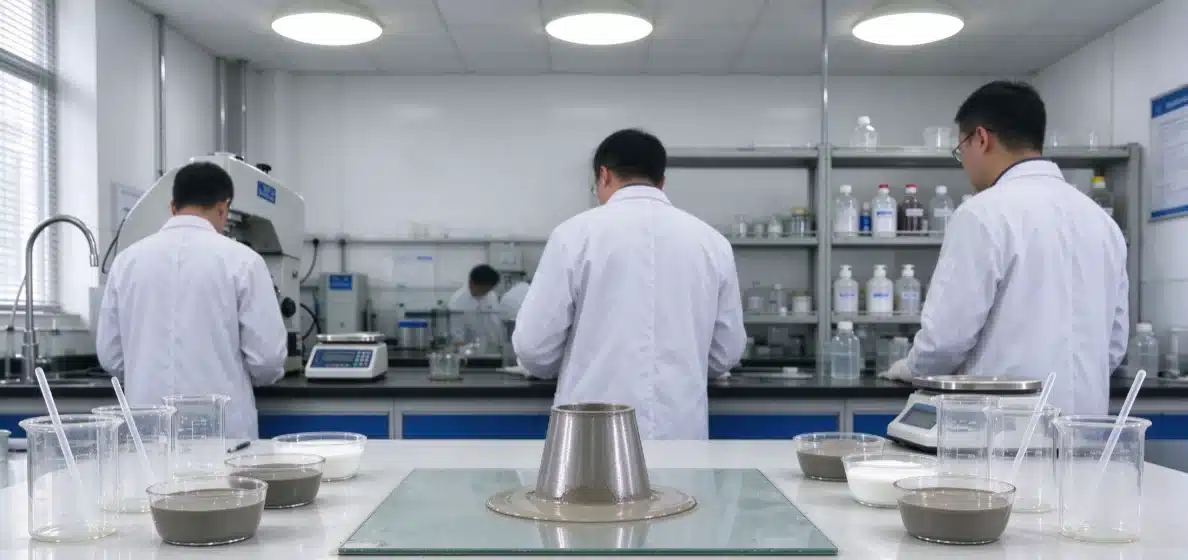
- Perform verification tests: Compatibility tests are mandatory to evaluate water‑reducing rate, slump retention and strength development.
- Comprehensive assessment: Evaluate total costs (materials, construction and durability) instead of focusing merely on unit price.
Precautions for Use
- Avoid arbitrary mixing: Different types of water‑reducing agents shall not be blended randomly, as adverse reactions may occur.
- Accurate metering: Water‑reducing agents are dosage‑sensitive, especially high‑performance ones.
- Pay attention to compatibility: Compatibility with cement, mineral admixtures and other admixtures must be verified by tests.
- Temperature effects: Slump loss accelerates under high‑temperature conditions; formula adjustment may be required.
Conclusion
The selection of water‑reducing agents reflects the technical pursuit and quality standard of a project. From the humble beginnings of lignosulfonate‑based agents, through the breakthrough of naphthalene‑based high‑efficiency agents, to the precise customization of polycarboxylate‑based products, each generation marks a leap forward in concrete technology.
In current engineering practice, polycarboxylate high‑performance water‑reducing agents have become the first choice for high‑quality concrete. Not only do they deliver superior technical performance, they also contribute to green building and sustainable development by cutting cement consumption and lowering water‑binder ratios. Choosing a suitable water‑reducing agent means selecting a reliable technical partner for concrete structures and laying a solid material foundation for long‑term project performance.
About MIKUR
Materials That Make a Difference.
If you encounter challenges regarding water‑reducing agent selection, compatibility or application in specific projects, our technical team can provide professional analysis and customized solutions built on extensive engineering databases. From laboratory compatibility tests to on‑site technical support, we strive to unlock the full technical potential of water‑reducing agents and maximize engineering benefits.