





PCE Superplasticizer: The Complete Guide for 2026
PCE superplasticizer (polycarboxylate ether superplasticizer) is a high-range water-reducing admixture used in concrete and cement-based materials. This guide covers how PCE works, its benefits and types, dosage testing, powder and liquid forms, practical application issues, and supplier selection. Performance and recommended dosage depend on the specific product, cementitious materials, mix design, and test conditions.
What Is PCE Superplasticizer?
Today we will take a systematic look at the most important admixture in modern concrete — polycarboxylate ether high-performance superplasticizer (PCE). In engineering practice it is often simply called “polycarboxylate superplasticizer”; its full English name is Polycarboxylate Ether Superplasticizer, abbreviated as PCE. Simply put, it is a high-performance water-reducing agent / high-efficiency dispersant used specifically in cement-based materials, and its core value comes down to two points: significantly improving concrete flowability without increasing water demand, and greatly reducing mixing water while keeping construction performance unchanged.
History and Development of PCE Superplasticizers
The development of polycarboxylate superplasticizer has gone through the lignin sulfonate admixtures of the 1930s, the naphthalene-based and melamine-based high-range water reducers of the 1960s, and the polycarboxylate-based high-performance water reducers of the 1990s.
Research and application of water reducers started somewhat later in China, but progressed rapidly. Since the 1950s, China has been researching and using lignin sulfonate water reducers and air-entraining agents; after the 1970s, it independently developed naphthalene-based and anthracene-based high-range water reducers; in the late 1990s, modified melamine, sulfamate and aliphatic high-range water reducers developed rapidly. In recent years, polycarboxylate high-performance water reducers have been recognized worldwide as the admixture with the best research and application prospects, with extensive research and rapid development both at home and abroad.
PCE have evolved through three generations: the first generation of ordinary water reducers, represented by lignin sulfonate products, appeared in the 1930s with backward processes and a low water-reduction rate and was quickly eliminated from the market; the second generation of high-range water reducers, represented by naphthalene-based products, appeared in the 1960s, and its market share has declined year by year because of relatively serious pollution during production and use; the third generation of high-performance water reducers, represented by polycarboxylate products, offers strong performance and environmental friendliness and is the mainstream product on the market today.

Key Benefits of PCE Superplasticizer in Concrete
The core functions of polycarboxylate superplasticizer can be summarized in the following three aspects:
Water reduction and efficiency enhancement
The most basic function of a water-reducing admixture is to substantially reduce mixing water while keeping concrete workability unchanged. A higher water-reduction rate directly lowers the water-cement ratio of concrete, which is the key route to higher concrete strength. When no admixture is added, cementitious materials such as cement, fly ash and slag powder readily agglomerate during mixing, adsorbing each other into clusters that encapsulate a large amount of free water. To achieve the slump and flowability required for construction, extra mixing water must be added, which pushes the water-binder ratio far beyond specification. Once a qualified water-reducing admixture is added, the combined effects of electrostatic adsorption and steric hindrance effectively break up the agglomerated binder particles and release the encapsulated free water. With no change at all in slump or construction workability, the mixing water is greatly reduced and the water-binder ratio effectively optimized, which cuts at the microscopic level the capillary interconnected pores formed by evaporation of free water after hardening, laying a solid foundation for high-strength, high-density concrete.
Improved workability
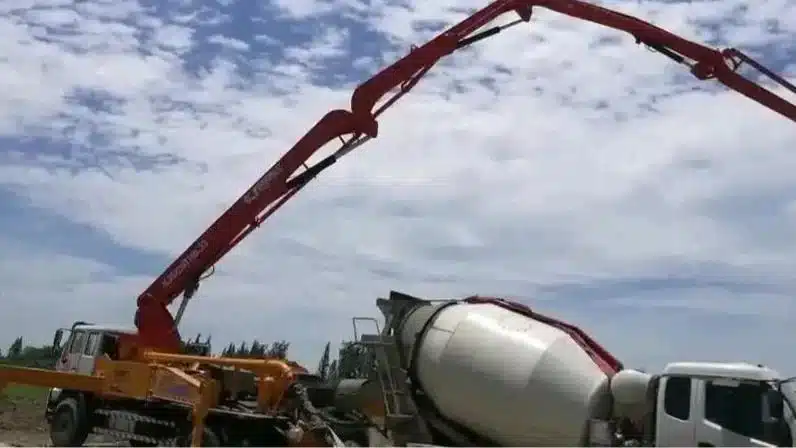
Polycarboxylate superplasticizer can significantly improve the flowability, cohesion and water retention of fresh concrete. At a constant mixing water content, adding a water reducer can greatly increase the slump and flowability of the concrete mixture. An appropriate dosage also effectively solves the problem of slump loss during long-distance transport and long-duration construction. Concrete without a water reducer has poor cohesion and water retention, and after mixing it readily exhibits bleeding, segregation, aggregate settlement, layering and caking; this not only makes placing and vibrating difficult but also easily produces structural defects such as honeycombing, surface voids, cavities and cold joints. With a water reducer, flowability, cohesion and water retention are improved in all respects, the mixture stays uniform and stable with no bleeding or segregation, and it is perfectly suited to complex conditions such as long-distance truck-mixer transport, pumping in high-rise buildings, mass continuous pouring and large-area road and bridge construction. This greatly reduces on-site construction difficulty, improves placement quality and construction efficiency, and safeguards the project schedule and structural integrity.
Improved mechanical properties and durability
By optimizing the distribution of cement particles and promoting cement hydration, polycarboxylate superplasticizer significantly improve the strength and durability of concrete, and markedly enhance resistance to permeability, freezing and carbonation.
Conventional concrete with a high water-binder ratio has dense internal pores and a loose structure; not only is the 28-day standard strength difficult to reach, but there are also quality risks such as large strength dispersion, low rebound values on the actual structure and later-age strength decay. After a water reducer is used to optimize the mix proportion, excess free water is greatly reduced and the binder hydrates more fully, producing denser and more uniform calcium silicate hydrate gel. This effectively raises both early-age strength and final standard strength, narrows the gap between specimen strength and in-situ strength, eliminates acceptance problems such as marginal failing strength and substandard rebound values, and comprehensively improves the load-bearing performance and mechanical stability of the concrete structure.
Most leakage, cracking, carbonation and freeze-thaw damage in concrete originates from excessive internal porosity, a loose structure and excessive shrinkage deformation. After a water reducer optimizes the water-binder ratio, capillary pores inside the concrete are greatly reduced and structural density is markedly increased, which effectively blocks water penetration paths and enhances resistance to permeability, freezing, carbonation and acid and alkali corrosion. At the same time, drying shrinkage and thermal shrinkage during hardening are greatly reduced, effectively suppressing drying-shrinkage cracks and temperature cracks, reducing structural water seepage, dampness and steel corrosion, greatly extending the service life of buildings, bridges and hydraulic structures, and lowering later operation and maintenance costs.
How Does PCE Superplasticizer Work?
Dispersion effect
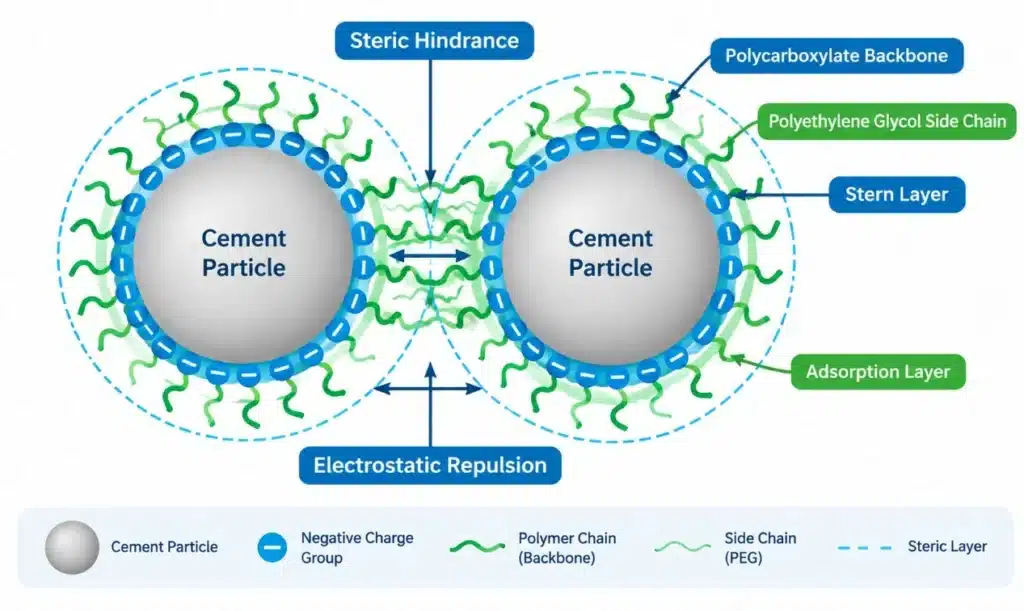
After cement is mixed with water, hydration causes a double electrical layer to form on the surface of the cement particles, creating a solvated water film; moreover, the opposite charges on the particle surfaces cause association between the particles, so that the cement paste forms a flocculated structure in which 10%–30% of the mixing water is encapsulated inside the cement particles, cannot participate in free flow and lubrication, and thus affects the flowability of the concrete mixture.
When a water reducer is added, its molecules adsorb directionally onto the surface of the cement particles, giving the particle surfaces the same charge (usually negative). This creates electrostatic repulsion, prompting the cement particles to disperse from one another and breaking up the flocculated structure, so that part of the encapsulated water is released and takes part in flow, thereby effectively increasing the flowability of the concrete mixture.
Lubrication effect
The hydrophilic groups in polycarboxylate superplasticizer are strongly polar, so the admixture film adsorbed on the surface of cement particles can form a stable solvated water film with water molecules. This water film has a good lubricating effect and can effectively reduce the sliding resistance between cement particles, further improving the flowability of concrete.
Steric hindrance effect
Water-reducing admixture molecules contain hydrophilic side chains that extend into the aqueous solution, forming a hydrophilic three-dimensional adsorbed layer of a certain thickness on the surface of the cement particles they cover. When cement particles approach each other, the adsorbed layers begin to overlap, producing steric hindrance between the particles; the greater the overlap, the stronger the steric repulsion, and the greater the hindrance to agglomeration between cement particles, so that concrete slump is well maintained.
Slow-release effect of grafted copolymer side chains
During the preparation of polycarboxylate superplasticizers, side chains are grafted onto the polymer molecule. These side chains not only provide steric hindrance, but in the highly alkaline environment of cement hydration they can also be gradually cleaved, releasing polycarboxylic acid with a dispersing effect; this improves the dispersion of cement particles and controls slump loss.
Types of PCE Superplasticizers
Polycarboxylate superplasticizers (PCE) come in a wide variety and can be classified mainly along four dimensions — chemical structure, performance characteristics, product form and composition — as follows:
I. Classification by chemical structure (core classification)
- Ester-type (polyester) polycarboxylate superplasticizers: produced by copolymerizing methacrylic acid/acrylic acid with methoxy polyethylene glycol methacrylate (MAA-MPEG), with ester bonds linking the main chain and the side chains. These products have a high water-reduction rate, but slump retention is relatively poor and the synthesis process is comparatively complex.
- Ether-type (polyether) polycarboxylate superplasticizers: produced by copolymerizing macromonomers such as allyl polyoxyethylene ether (APEG) or methallyl polyoxyethylene ether (TPEG) with small monomers bearing functional groups, with ether bonds linking the main chain and the side chains. These products have a simple synthesis process, low energy consumption and good slump retention, and are the mainstream products on the market today.
- Amide/imide-type polycarboxylate superplasticizers: formed by grafting EO/PO nitrogen-halogen compounds onto copolymers of acrylic acid/methacrylic acid or methoxy-containing esters; they have a narrow molecular weight distribution and superior performance, but relatively high cost.
- Amphoteric polycarboxylate superplasticizers: contain both anionic groups (such as sulfonic acid groups) and cationic groups (such as polyamide) in the molecule; they have a unique dispersing ability and superior performance, but are expensive.
- Ester-ether copolymerized polycarboxylate superplasticizers: graft the advantageous functional groups of ester and ether types onto the same main chain to create a synergistic effect, improve overall performance, and solve the problems of dosage sensitivity and poor cement adaptability.
- Hyperbranched polycarboxylate superplasticizers: introduce the three-dimensional configuration of hyperbranched polymers (such as hyperbranched polyamide-amine) to further enhance the steric hindrance effect, with good adaptability to cement.
II. Classification by performance characteristics (by function)
Standard (ordinary) type polycarboxylate superplasticizers: provide general water reduction and strength enhancement, with a moderate water-reduction rate, and are suitable for ordinary concrete construction.
Slump-retaining (high water-retention) type polycarboxylate superplasticizers: through increased carboxylic acid density on the main chain and a long side-chain design, combined with retarding components, they offer excellent slump retention and are suitable for long-distance transport and high-temperature construction, solving time-dependent slump loss of concrete.
Early-strength type polycarboxylate superplasticizers: by reducing the steric hindrance of side chains and compounding early-strength components, they accelerate cement hydration and raise the early strength of concrete, and are suitable for winter construction or projects requiring rapid demolding.
Retarding type polycarboxylate superplasticizers: through molecular design or compounding with retarders, they extend the initial and final setting times of concrete, and are suitable for high-temperature construction or mass concrete pouring.
High water-reduction type polycarboxylate superplasticizers: through a high proportion of acrylic acid and a comb-shaped multi-side-chain design, they achieve an extremely high water-reduction rate (up to 35%–45%), and are suitable for high-strength and ultra-high-strength concrete.
Air-entraining type polycarboxylate superplasticizers: introduce micro air-entraining components to generate uniform fine bubbles and improve freeze-thaw resistance, and are suitable for projects with high durability requirements.
Shrinkage-reducing/viscosity-reducing type polycarboxylate superplasticizers: in addition to water reduction, they can adjust concrete rheology and reduce shrinkage or viscosity, and are suitable for self-compacting concrete or low water-cement ratio concrete.
Ⅲ.Classification by product form
1.Liquid polycarboxylate superplasticizers: pale yellow or colorless transparent liquids, usually with a solid content of 20%–50%; easy to use and suitable for ready-mixed concrete plants and on-site construction.
2.Powder (solid) polycarboxylate superplasticizers: white powdery solids with a solid content of ≥96%; easy to transport and store, and suitable for dry-mix mortar, precast components, low-temperature winter construction and other special scenarios.
3.Polycarboxylate superplasticizer flakes: white or pale yellow irregular flakes with a higher solid content than the powder form, reaching 98–99%; easy to transport and store, usable in concrete and completely soluble in water, but before use the flakes must be added to water and stirred evenly to prepare a solution with a solid content of 20% or 10%.
IV. Classification by composition
1. Single-component polycarboxylate superplasticizers: formed from a single polymer group, with relatively simple performance focused on one core function (such as high water reduction or slump retention).
2.Composite polycarboxylate superplasticizers: blends of polymer groups of different types or functions, or compounded with retarders, early-strength agents, air-entraining agents and other additives, to achieve multiple combined functions and meet complex engineering requirements.
Why Is the Optimal PCE Superplasticizer Dosage Important?

The optimal dosage of PCE is not a fixed value; it is jointly determined by the characteristics of the admixture product, the composition of the cementitious materials, the concrete mix proportion and the construction conditions. Too low a dosage may fail to achieve the target flowability or water reduction; too high a dosage may increase cost and, in certain material systems, cause bleeding, segregation, changes in setting time or other workability problems.
Therefore, concrete producers should not determine the final dosage solely from product data sheets; they should verify it through staged testing and concrete trial mixes, taking into account the actual material conditions and construction requirements.
Scientifically determining the dosage helps optimize concrete flowability and construction workability, improve the water-reduction effect and slump retention, assess the adaptability of PCE to different cements and other admixtures, and avoid unnecessary admixture consumption.
Factors Affecting PCE Superplasticizer Dosage
1. Chemical composition and mineral characteristics of cement
Cements differ in clinker mineral composition, sulfate balance, alkali content and hydration characteristics. These factors affect the adsorption and dispersion behavior of PCE. For example, the content and reactivity of the aluminate phase, and the availability of sulfates, can both influence the adsorption competition and flow retention performance of PCE.
2. Cement fineness and particle size distribution
The specific surface area and particle size distribution of cement affect the total surface area of the particles, the water demand characteristics and the admixture demand. A higher specific surface area may increase the system’s demand for the water reducer, but the actual result still depends on cement composition, particle distribution and PCE product characteristics; the optimal dosage cannot be judged from specific surface area alone.
3. Composition of cementitious materials
Slag powder, fly ash, silica fume and other mineral admixtures change the particle composition, water demand characteristics and rheological behavior of the paste. When determining the PCE dosage, the entire cementitious material system should be considered, not just the cement.
4. Concrete mix proportion and target workability
The water-binder ratio, sand ratio, aggregate gradation, moisture content and binder content all affect the flowability and stability of concrete. Ready-mixed concrete plants usually focus on initial slump, slump retention, pumpability and production stability; precast concrete also requires attention to formability, setting time and early strength; highly flowable concrete requires simultaneous control of cohesion, bleeding and segregation.
5. PCE product type and method of addition
PCE powder and liquid products may differ in solid content, dissolution method, product composition and method of use, and different powder products may also have different dispersion and slump-retention characteristics. Before use, the dosage basis, dissolution or dispersion requirements, scope of application and method of addition given in the product technical data should be checked. The order of addition, mixing time and method of water addition may also affect the results and should be verified through controlled tests.
How to Test PCE Superplasticizer Dosage Using Cement Paste Fluidity
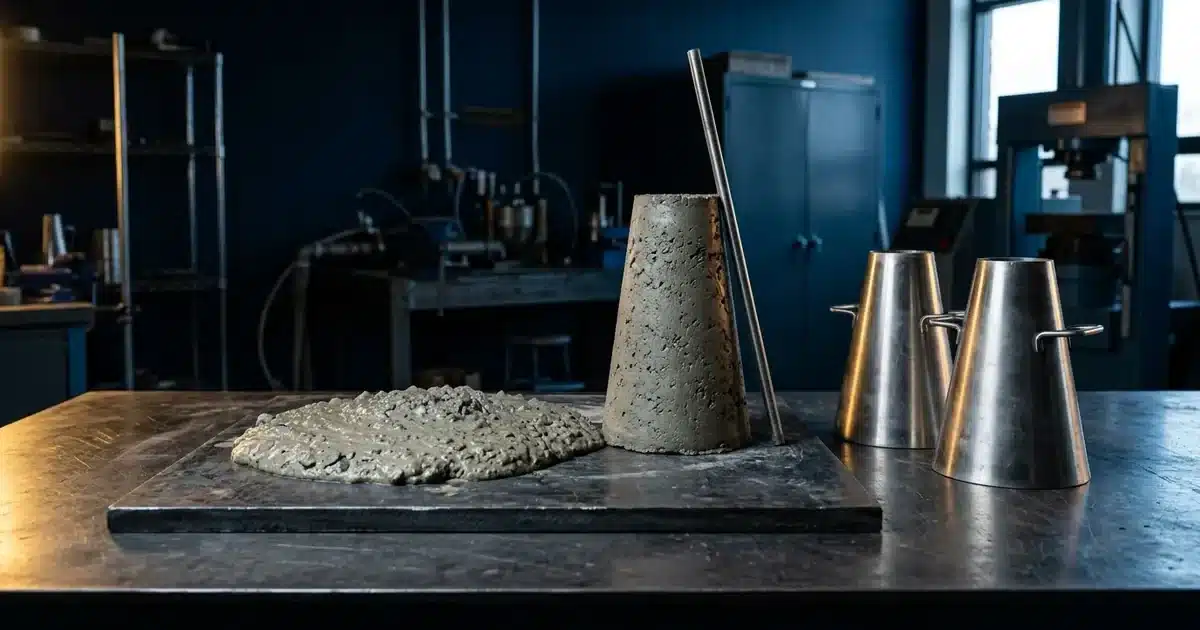
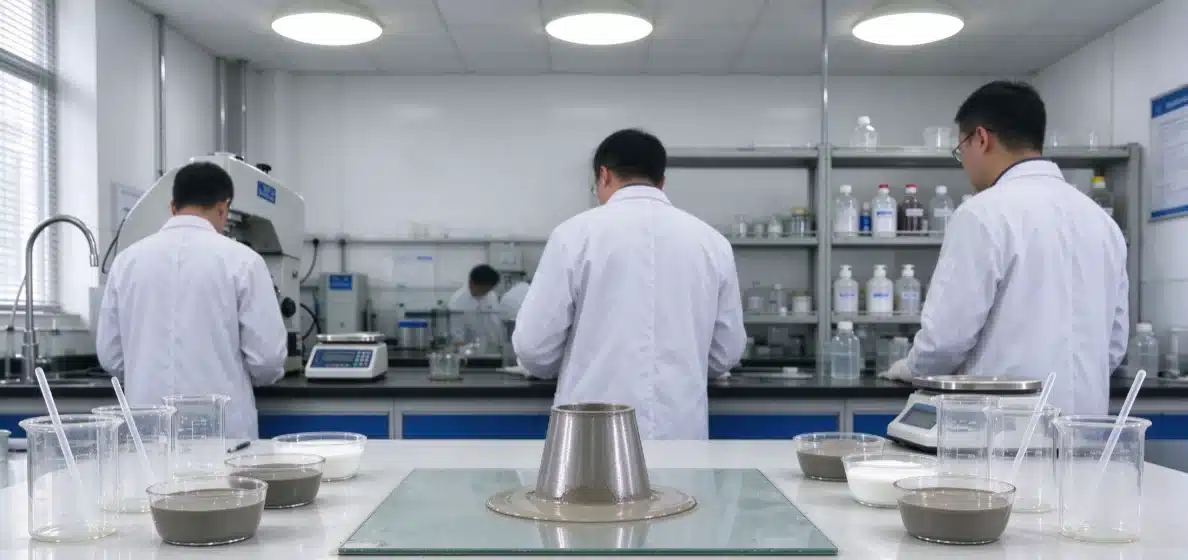
The cement paste fluidity test is an easy-to-implement preliminary screening method that can be used to compare the dispersing effect of different PCE dosages and to preliminarily assess the adaptability between the water reducer and the cement. However, the paste fluidity test is intended for screening and comparison; it is not equivalent to confirming the final optimal dosage for concrete.
Step 1: Prepare test materials and equipment
Prepare the cement used in actual engineering or production, the MIKUR PCE powder to be tested, water meeting the test requirements, an electronic balance, paste mixing equipment, a fluidity test mold and measuring tools. If the actual mix design includes mineral admixtures, their influence on the overall cementitious material system should also be considered later.
Step 2: Determine the dosage calculation basis
For a dosage based on the mass of cementitious materials, the calculation formula is: PCE dosage (%) = mass of PCE product ÷ mass of cementitious materials × 100%. For example, if the total mass of cementitious materials is 400 kg and the product dosage is 0.20%, the required product mass is 400 × 0.20% = 0.80 kg. This value is only a calculation example and does not represent the optimal dosage for any specific project. In actual calculation, it must be confirmed whether the product dosage is calculated on the basis of the commercial powder mass, the active ingredient mass or another specified basis.
Step 3: Design comparative tests at different dosages
Using the product’s recommended dosage as a reference, design several dosage levels in incremental steps. In each test group, the cement type and batch, water content, mixing procedure, test temperature and test method should be kept the same, with only the dosage factor under study being changed. PCE powder should be handled according to the dissolution or addition method specified for the product to ensure comparability between groups.
Step 4: Record and compare test results
Record the product model and batch, the source and batch of the cement or cementitious materials, the actual dosage and calculation basis, the water-binder or water-cement ratio, the mixing procedure and test temperature, the initial paste fluidity and the fluidity after the specified time, and whether abnormal thickening, bleeding or other abnormal phenomena occurred. The test procedure, mold dimensions and method of calculating results should follow the applicable test standards or the company’s verification procedures.
Step 5: Interpreting the results
Compare whether the fluidity of each group reaches the pre-set screening target, whether the paste is uniform, whether fluidity is reasonably maintained within the specified time, and whether the performance improvement gradually diminishes as the dosage increases. If further increases in dosage bring only limited improvement while continuously increasing material consumption, there may be no economic advantage. The final judgment should still be based on the results of concrete trial mixes.
Recommended Dosage of PCE Superplasticizer Powder
The recommended dosage of PCE powder is an important reference for setting the test range, but it should not be directly regarded as the optimal dosage applicable to all projects. For MIKUR PCE powder, the corresponding product technical data should first be consulted to determine the initial test range, which is then adjusted according to the actual cement, cementitious material composition and target performance.
Precautions for Practical Use
- Confirm the dosage basis: clarify whether the product dosage is calculated on the total mass of cementitious materials or on another basis.
- Check the product model: different PCE products may have different molecular structures and performance priorities, so the optimal dosage of another model cannot be applied directly.
- Control test conditions: keep the water content, mixing procedure and test conditions consistent across groups.
- Evaluate time-dependent performance: compare not only initial flowability but also changes in workability over the specified time.
- Verify concrete performance: confirm strength, stability and construction performance through actual concrete trial mixes.
- Watch for production fluctuations: when the cement source, batch or aggregate conditions change, the adaptability of the mix design should be re-evaluated.
If problems such as insufficient initial flowability, excessively rapid slump loss or bleeding and segregation occur, do not simply keep increasing the PCE dosage. Instead, comprehensively check cement adaptability, material moisture content, cementitious material composition, order of addition and mixing conditions to identify the actual cause of the abnormal performance.
How to Determine the Optimal PCE Superplasticizer Dosage
Determining the optimal dosage of PCE polycarboxylate superplasticizer requires comprehensive consideration of the admixture product characteristics, cement adaptability, cementitious material composition, concrete mix proportion and construction conditions.
Suggested workflow:
confirm the product technical data → carry out paste fluidity screening → compare different dosages → conduct actual concrete trial mixes → evaluate time-dependent performance and strength → comprehensively determine the applicable dosage.
The paste fluidity test helps narrow the test range, while actual concrete trial mixes are needed to further verify the overall performance of the product in a specific project. Scientifically determining the PCE dosage helps improve flowability and construction performance, control material consumption, optimize mix cost and improve production stability.
If you are looking for PCE powder suitable for a specific cement or concrete mix, you are welcome to contact MIKUR and provide your application requirements and existing mix information so that product selection and test verification plans can be discussed further.
How to Use PCE Superplasticizer Correctly
1. Determine the dosage:
– In general, polycarboxylate superplasticizers are added at 0.2%–0.8% of the total mass of cementitious materials.
– Before actual use, the solid content of the base liquor and the admixture dosage should be determined by testing, because dosages may differ between brands and models of polycarboxylate superplasticizers.
– When the concrete mix contains active admixtures such as fly ash or slag, the admixture dosage should be calculated on the total amount of cementitious materials.
2. Adaptability testing:
– Before use, or after changing the cement type or batch, adaptability tests with the cement should be carried out to ensure compatibility between the admixture and the cement.
3. Method of use:
– Polycarboxylate superplasticizers can be mixed directly with the concrete mixture, or liquid products can be blended directly with the concrete in water, but accurate metering must be ensured.
– The “post-addition method”, in which the admixture is added in the final stage of concrete mixing, gives better results.
– After addition, the mixing time should be extended by one minute to ensure that the admixture is evenly dispersed.
4. Compounding and coordination:
– Polycarboxylate superplasticizers can be used alone or compounded with slow-release base liquor to reduce concrete slump loss.
– They can also be compounded with functional additives to obtain admixtures with retarding, early-strength, anti-freezing and pumping functions.
– When used together with other admixtures such as early-strength agents, air-entraining agents and retarders, compatibility tests should be carried out.
5. Precautions:
– During use, prolonged contact with iron materials should be avoided, because polycarboxylate superplasticizers are acidic and this may cause performance changes.
– Strictly calculate the amount of superplasticizer and mixing water; do not increase or decrease them arbitrarily, so as to avoid affecting normal concrete construction and pouring quality.
– Strengthen early-stage curing of the concrete during use to prevent cracking.
– During storage, protect from rain and moisture, avoid prolonged exposure to sunlight, keep away from open flames, and store sealed within a suitable temperature range.
6. Safety and environmental protection:
– Polycarboxylate superplasticizers are non-toxic and non-corrosive, but ingestion and contact with the eyes should be prevented; in case of accidental eye contact, rinse immediately with clean water.
– The production process of this product does not pollute the natural environment and is conducive to sustainable development. In summary, the correct use of polycarboxylate superplasticizers requires comprehensive consideration of dosage, adaptability, method of use, compounding and coordination, and precautions. Sufficient testing and preparation should be carried out before use to ensure the performance and quality of the concrete. At the same time, safety and environmental issues should also be addressed to ensure safety during use and environmental sustainability.
Common PCE Superplasticizer Problems and Solutions
- High temperature sensitivity:
– Ensure that the construction ambient temperature is within an appropriate range and avoid extreme temperature changes.
– Monitor and adjust the slump of the concrete mixture at different construction times to adapt to temperature changes.
2. High-strength concrete processing difficulties:
– Optimize the concrete mix proportion, adjust the clay properties and pumping pressure to ensure smooth construction.
– When necessary, increase the concrete mixing time and intensity to improve concrete flowability.
- Sensitivity to the fines content of sand, gravel and asphalt mixtures:
– Strictly control the fines content of the sand, gravel and asphalt mixture to prevent excessive powder content from affecting the effect of the superplasticizer.
– Test the fines content regularly and adjust the superplasticizer dosage according to the test results.
4. Selectivity of air-entraining agents and defoaming additives:
– When using polycarboxylate superplasticizers, select appropriate air-entraining agents and defoaming additives to improve concrete performance.
– Determine the optimal type and dosage of air-entraining agent and defoaming additive through testing.
- Large variation in concrete slump:
– Strictly control the water content per cubic meter of concrete to ensure a stable water amount.
– Conduct adaptability tests on each batch of cement and select suitable admixtures and dosages.
– Extend the concrete mixing time to ensure that the concrete mixture is uniform.
- Concrete bleeding, segregation and layering:
– Adjust the superplasticizer dosage to avoid bleeding and segregation caused by an excessive dosage.
– Strengthen early-stage curing of the concrete to prevent layering.
- Concrete sticking to forms:
– Strengthen communication with the construction site to ensure that concrete pouring and vibrating methods meet specification requirements.
– Adjust the paste volume in the concrete or use other methods to improve the flowability of the concrete mixture.
- Prolonged final setting time of concrete:
– Appropriately reduce the superplasticizer dosage to shorten the final setting time of concrete.
– When constructing in a low-temperature environment, pay attention to insulation and curing to accelerate the cement hydration reaction.
- Reduced concrete strength:
– Check the concrete mix proportion and raw material quality to ensure that they meet design requirements.
– Appropriately increase the amount of mineral admixture to improve concrete strength.
10. Problems with mixing with naphthalene-based superplasticizers:
– Polycarboxylate superplasticizers and naphthalene-based superplasticizers must never be mixed, to avoid instability in concrete performance.
– When used alternately in the same mixing unit, the admixture weighing containers, pipes and mixer must be thoroughly cleaned.
How to Choose a PCE Superplasticizer Supplier
01 check three core performance indicators
Do not rely on verbal claims when selecting a product; all performance should be based on type inspection reports, with reference to the standard GB/T 8076-2025 “Concrete Admixtures”.
Water-reduction rate
This represents the water-reducing capability; high-performance polycarboxylate superplasticizers generally have a water-reduction rate of 25%–35%, which directly affects concrete strength and the water-binder ratio. Look at the standard test values first, not at extreme values.
Slump loss over time
For long-distance transport of ready-mixed concrete, excessive slump loss within 1–2 hours will cause the concrete in the truck mixer to dry out and become unpumpable; this indicator requires particular attention in high-temperature construction environments.
Compressive strength ratio
This reflects the contribution of the admixture to the later-age strength of concrete and is an important basis for judging whether a product meets project acceptance requirements.
02 Easily overlooked: compatibility of cementitious materials
The same superplasticizer will perform differently after switching cement or sand and gravel raw materials — what the industry often calls material pickiness.
When the mud content of sand and gravel is high, the performance of ordinary polycarboxylate superplasticizers declines noticeably; in such conditions, mud-resistant models are recommended. Whatever sample a supplier provides, a trial mix using the actual on-site raw materials must be carried out before formal entry to the site — this is the way to reduce construction risk.
03 What to Look for in a Supplier
Besides the product itself, supply and technical service also determine project stability.
Verify company qualifications and batch test reports, and refuse a single report applied to all product models;
Confirm supply capacity to avoid shortages during peak periods;
Check whether on-site technical support is available and whether bleeding or segregation problems can be responded to quickly.
PCE Superplasticizer Trends and Future Development
With the global use of large-scale high-performance green concrete, and given the advantages of polycarboxylate superplasticizers — low dosage with a high water-reduction rate, good flow retention, small slump loss and wide adaptability to cement — they have bright development prospects. The following is an assessment of future development directions:
(1) Optimizing the process.
The synthesis of polycarboxylate superplasticizers involves two steps: esterification and polymerization. During esterification, the relatively inexpensive polyethylene glycol readily undergoes crosslinking; therefore, by studying the influence of factors such as reaction solvent, reactant concentration, reaction temperature and reaction time, conditions that minimize crosslinking and suit industrial production can be found, thereby reducing production and construction costs.
(2) Developing series products.
Based on earlier exploration at home and abroad, and from the perspective of application, it is recommended that polycarboxylate superplasticizers form the following basic product series: standard type, retarding type, early-strength type, slump-retaining type, shrinkage-reducing type and viscosity-reducing type.
(3) Attaching importance to molecular structure design.
Polycarboxylate high-performance superplasticizers have a “comb-like” structural feature, with comb-shaped side chains carrying anionic and nonionic groups; they are a type of mixed surfactant. By changing the types and proportions of monomers and the reaction conditions, polycarboxylate high-range water reducers with various characteristics and performance can be produced. Within the same molecule, side chains with different hydrophilic groups give different adsorption types, so a single molecule can achieve multiple functions such as high water reduction, retardation, air entrainment, dispersion, wetting, solubilization, stabilization and control of slump loss.
(4) Attaching importance to the development of multifunctional composite superplasticizers.
For example, shrinkage-reducing superplasticizers should, in addition to their water-reducing function, be able to adjust concrete rheology.
PCE Superplasticizer: Frequently Asked Questions
What does PCE stand for in concrete admixtures?
PCE stands for polycarboxylate ether. In concrete applications, it commonly refers to a family of high-range water-reducing superplasticizers designed to disperse cement particles and improve workability or reduce mixing water.
Is PCE the same as every superplasticizer?
No. PCE is one type of superplasticizer. Other families include sulfonated naphthalene formaldehyde (SNF) and sulfonated melamine formaldehyde (SMF). The appropriate choice depends on performance requirements, material compatibility and project economics.
Should I choose PCE powder, flakes or liquid?
Liquid PCE is convenient for dosing in many ready-mix operations, while powder and flakes can be practical for shipping, storage or preparing solutions. Compare active content, dissolution requirements, transport cost and the technical data sheet for each grade before purchasing.
How can I select the right PCE superplasticizer grade?
Start with your application, cement and supplementary cementitious materials, target slump, retention time and strength requirements. Request technical data and samples, then validate the proposed grade in paste screening and actual concrete trial mixes before setting the final dosage.
Explore MIKUR polycarboxylate ether products or superplasticizer solutions to discuss grade selection and sample testing.